Can't Start Work? Why You Procrastinate and the 5-Minute Fix
Know what to do but can't start? Why procrastination is about the start, not laziness, and the 5-minute habit that gets you going every day.
 Sahil Ranout4 min read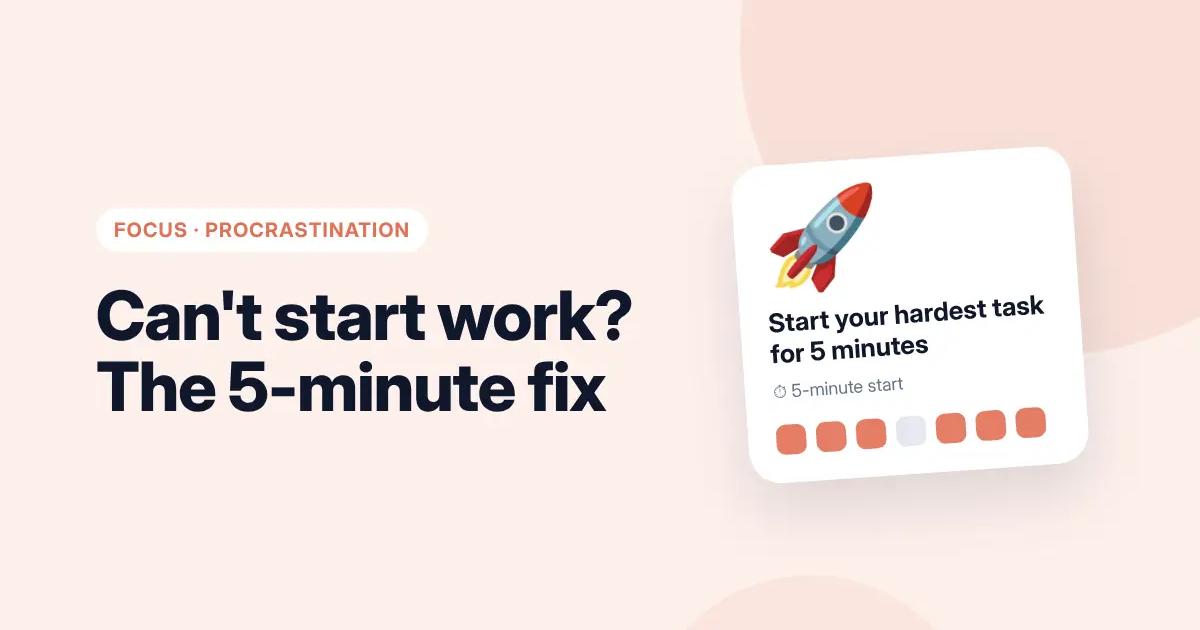
On this page
You know exactly what you need to do. You've had it on your list for days. And yet you're reorganising your desk, checking messages and opening a new tab, anything except starting.
Procrastination is rarely about laziness or bad time management. It's usually about the start: the first step feels too big, too vague or too uncomfortable. Shrink the start and the rest gets easier. Here's how.
Why you can't start (even when you want to)
Procrastination is often described as an emotion problem rather than a time problem. Starting the task means facing something unpleasant: boredom, uncertainty, or the fear of doing it badly. Avoiding it gives instant relief, and that relief is what makes the habit stick.
A few things make starting especially hard:
- The task is vague. "Work on the report" isn't a step you can take. "Write the first heading" is.
- The task feels huge. Your brain weighs the whole thing, not the first five minutes.
- There's no clear start time. "Later today" quietly becomes tomorrow.
- Easier rewards are one tap away. Messages and feeds win the moment you hesitate.
The 5-minute start
Commit to working on your hardest task for just five minutes. That's it. When the five minutes are up, you're allowed to stop.
Five minutes is too small to dread, so it gets past the part your brain resists. Most of the time, once you've started, carrying on feels fine. On the days it doesn't, you've still made progress and kept the habit alive.
In Habigrow this is the Start your hardest task for 5 minutes habit, with a 10 am reminder you can move to whenever you work best.
4 ways to make starting easier
1. Decide when and where in advance
Plans that spell out when and where you'll act, known as implementation intentions, work. A review of 94 studies by Peter Gollwitzer and Paschal Sheeran found they had a medium-to-large effect on people reaching their goals compared with simply intending to.
Formula: When it's [time] and I'm at [place], I'll start [first step].
For example: "When I sit down at my desk after coffee, I'll open the report and write the first heading."
2. Make the first step embarrassingly specific
| Instead of | Try |
|---|---|
| Work on the report | Open the doc and write three bullet points |
| Study for the exam | Do the first five practice questions |
| Clean the house | Clear the kitchen counter |
| Reply to emails | Answer the oldest one |
3. Let a timer do the starting
A timer turns "I should work" into a session with a clear beginning and end. Start with five minutes, then move up to a 25-minute focus block when that feels easy. Habigrow's Deep Work habit uses the built-in focus timer.
4. Pick tomorrow's top 3 tonight
Deciding what to work on is a task of its own. Do it the evening before so the morning starts with doing, not choosing. The Plan Tasks checklist habit makes this a two-minute routine.
Traps that look like progress
Some procrastination looks productive. Watch for these:
- Waiting to feel ready. Motivation usually shows up after you start, not before.
- Doing the easy tasks first. Clearing small jobs feels good, but the hard task just moves to tomorrow.
- Over-planning. A perfect plan for a task you haven't started is still avoidance.
- Perfectionism. If the first draft has to be good, you won't write it. Aim for a rough version you can fix later.
- Keeping your phone on the desk. Every notification is an easy exit. Put it in another room for your five minutes.
What to do on a bad day
Some days even five minutes feels impossible. On those days, shrink the step again: open the file, read the brief, write one sentence. The goal is to keep the habit alive, not to have a great day.
If you notice you always stall at the same point, like a specific type of task, that's useful information. Break that part into smaller steps, or ask for help with it.
Build it into a daily habit
One good day doesn't fix procrastination. A habit does. Keep the start tiny, do it at the same time each day, and track it.
- Week 1: 5 minutes on your hardest task every morning.
- Week 2: Add tomorrow's top 3 each evening.
- Week 3: Grow the 5 minutes into a 25-minute focus block on the days it feels good.
If you miss a day, don't restart from zero. Do the five-minute version the next day. Habigrow's streak counts a day as done when you finish half your habits, so one off day doesn't erase your progress.
Frequently asked questions
Why do I procrastinate even on things I care about?
Because caring raises the stakes. The more a task matters, the more uncomfortable starting can feel, and avoiding it brings quick relief. Making the first step tiny lowers that discomfort.
What is the 5-minute rule for procrastination?
Commit to working on a task for just five minutes, with permission to stop afterwards. It gets you past the hardest part, starting, and often you'll keep going.
Is procrastination a sign of ADHD?
Everyone procrastinates sometimes. Trouble starting tasks is common with ADHD, but procrastination alone doesn't mean you have it. If it's affecting your work or life, talk to a professional.
What's the best time of day to do my hardest task?
For many people it's the morning, before messages and meetings pile up. The best time is the one you can repeat every day, so pick a slot and protect it.
Do focus timers like Pomodoro actually help?
They help many people because they give work a clear start and end. Start small, with five or ten minutes, and build up to longer blocks once starting feels easy.
Does this sound like you?
Pick your problem and get one small habit to start with today.
Habits from this guide
- #procrastination
- #focus
- #productivity
- #adhd
- #deep work
 Written bySahil RanoutProductivity Expert
Keep reading
Breaking Habits
How to Stop Scrolling in Bed and Fall Asleep Earlier
Stuck scrolling in bed until 1 am? Why bedtime procrastination happens and a simple 3-step plan to put your phone down and fall asleep earlier.
5 min read

Habit Science
The Science of Habit Formation: How to Build Habits That Stick
Habits aren't a willpower problem, they're a design problem. How habits form in the brain, why most attempts fail after a week, and a simple system that lasts.
7 min read