How to Stop Scrolling in Bed and Fall Asleep Earlier
Stuck scrolling in bed until 1 am? Why bedtime procrastination happens and a simple 3-step plan to put your phone down and fall asleep earlier.
 Sahil Ranout5 min read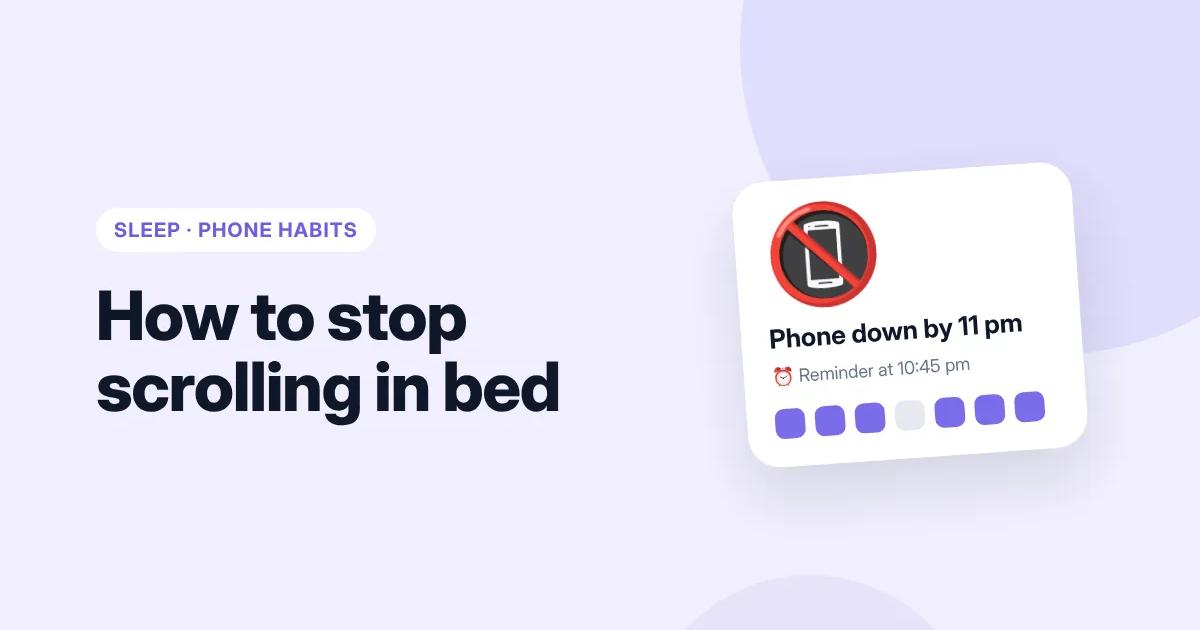
On this page
It's 11 pm. You tell yourself you'll check your phone for five minutes. Then it's 1 am, you're wide awake, and tomorrow already feels heavy.
If that sounds familiar, you're not lazy and you're not alone. Researchers even have a name for it: bedtime procrastination, going to bed later than you meant to, with no good reason for the delay. This guide explains why it happens and gives you a simple plan to stop scrolling in bed, starting tonight.
Why you scroll in bed when you're tired
A 2014 study by Floor Kroese and colleagues described bedtime procrastination as a self-control problem: people knew they should go to bed, wanted to, and still didn't. A few things make it worse:
- The phone is right there. If it's within reach, "just checking" takes zero effort, and stopping takes a lot.
- Feeds never end. There's no last page, so there's no natural point to stop.
- Evening is your only free time. After a busy day, scrolling can feel like taking time back for yourself. People often call this revenge bedtime procrastination.
- Willpower is lowest at night. You're asking the most tired version of you to make the hardest decision of the day.
Notice that none of these are fixed by trying harder. They're fixed by changing the setup.
A 3-step plan to stop scrolling in bed
Step 1: Pick one phone-down time and keep it
Decide once, not every night. Choose a time about 30 to 60 minutes before you want to be asleep, like 11 pm, and make that your cut-off. A fixed rule is easier to follow than "I'll stop soon".
Set a reminder 15 minutes before so it never sneaks up on you. In Habigrow, the Phone down by 11 pm habit comes with that reminder already set.
Step 2: Make the phone hard to reach
This is the single biggest lever. Charge your phone outside the bedroom, in the hallway, kitchen or living room. If you use your phone as an alarm, a cheap alarm clock pays for itself in the first week.
Step 3: Replace the scroll with a wind-down
Scrolling fills a gap: you want a few minutes that are just yours. Give that time something to do that doesn't light up your face:
- Read a few pages of a paper book.
- Write tomorrow's top 3 so your brain stops rehearsing them.
- Stretch, shower or listen to a podcast with the screen off.
Fix the morning to fix the night
What you do in the morning shapes how sleepy you feel at night.
- Wake up at the same time every day, weekends included. A steady wake-up time helps keep your body clock steady.
- Get daylight soon after waking, even 10 minutes outside.
- Keep your phone off for the first 30 minutes. Starting the day without the feed makes it easier to end the day without it too.
Your first week
Don't try to fix everything at once. Add one piece at a time:
| Days | What to do | Why |
|---|---|---|
| 1–2 | Set your phone-down time and a reminder 15 minutes before | One clear rule, no nightly debate |
| 3–4 | Charge the phone outside the bedroom | Out of reach means out of mind |
| 5–6 | Add a 10-minute wind-down: book, notes or stretching | Fill the gap the scrolling used to fill |
| 7 | Compare this week's sleep with last week's | See it working, so you keep going |
Common mistakes that keep you up
- Setting a vague rule. "Less phone at night" can't be checked. "Phone down by 11 pm" can.
- Relying on screen-time limits alone. One tap dismisses them. Distance works better than a pop-up.
- Going all in on day one. A new bedtime, no phone, meditation and journaling, all at once, rarely lasts a week. Add one change at a time.
- Sleeping in to catch up. Lie-ins on the weekend make Sunday night harder. Keep your wake-up time roughly the same.
What if you still can't fall asleep?
Putting the phone down won't make you fall asleep instantly, especially in the first few nights. If you've been lying awake for a while, get up, do something calm in dim light, like reading, and go back to bed when you feel sleepy. Lying in bed frustrated tends to make the next night harder.
If poor sleep lasts for weeks or affects your days, talk to a doctor. Habits help a lot, but they're not a treatment for sleep problems.
How to know it's working
Track two things: whether you put the phone down on time, and how you slept. After a week, compare the nights you hit your phone-down time with the nights you didn't.
That comparison is what Habigrow is built for. Your habit check-ins, sleep log and mood sit side by side, so the pattern shows up without spreadsheets. And if you miss a night, the streak forgives it: a day counts when you finish half your habits.
Frequently asked questions
What is bedtime procrastination?
It's going to bed later than you intended without a good reason, like scrolling, watching one more episode or doing nothing in particular. Researchers first described it in 2014 as a self-control problem rather than a lack of time.
What is revenge bedtime procrastination?
It's the popular name for staying up late to win back free time after a busy or stressful day. The fix is the same: protect some 'me time' earlier in the evening and give your phone a fixed cut-off.
How long before bed should I stop using my phone?
A good starting point is 30 to 60 minutes before you want to be asleep. The exact number matters less than picking one time and keeping it every night.
What if I use my phone as an alarm?
Get a basic alarm clock so the phone can sleep somewhere else. If that's not possible, put the charger across the room and turn on Do Not Disturb at your phone-down time.
Will a habit tracker really help with sleep?
Tracking won't make you sleep, but it shows you what's working. Seeing that you sleep better on nights you put the phone down early is a strong reason to keep doing it.
Does this sound like you?
Pick your problem and get one small habit to start with today.
Habits from this guide
- #sleep
- #screen time
- #bedtime procrastination
- #phone habits
- #evening routine
 Written bySahil RanoutProductivity Expert
Keep reading
Peak Focus
Can't Start Work? Why You Procrastinate and the 5-Minute Fix
Know what to do but can't start? Why procrastination is about the start, not laziness, and the 5-minute habit that gets you going every day.
4 min read

Habit Science
The Science of Habit Formation: How to Build Habits That Stick
Habits aren't a willpower problem, they're a design problem. How habits form in the brain, why most attempts fail after a week, and a simple system that lasts.
7 min read